Life can feel like an epic journey — a winding path through unknown terrain filled with challenges, battles, and moments of doubt. Even the most accomplished sometimes find themselves at a crossroads, unsure which direction to take. Yet a way forward exists, even in the darkest forests or fiercest storms.
Racing thoughts at 2am, the chest-tight feeling before meetings, the sense that something is always about to go wrong. We'll work on what's driving it — not just how to white-knuckle through.
For caregivers, teachers, healthcare workers, parents, anyone who's run on empty for years. We'll look at what's actually replenishing and what's quietly draining you.
Trauma doesn't always look like the textbook version. Sometimes it looks like a flinch, a shutdown, a relationship that keeps repeating. We'll go gently and at your pace.
The argument you've had a hundred times. The pull toward people who can't quite meet you. The patterns that started long before this relationship. We'll trace them — and try something different.
"It's like dumping out your backpack and sorting through what you've been carrying. Some things serve you. Some things you forgot you had. Other things you've been carrying were never yours to carry."
I'm honest, direct, and allergic to false safety. I work with people who are tired of performing, tired of shrinking, and tired of being told their grief, anxiety, trauma, or neurodivergence is "too much." I'm EMDR trained, use ACT and CBT when they're useful, and bring a Trust-Based Relational lens to everything. But more than any tool, I bring a commitment to saying what needs to be said and working with you, not around you.
"This isn't about becoming a better version of someone else. It's about living authentically — aligning behavior + values."
Wendy Albrecht, LMSW · Topeka, KS
Update the link above with your Psychology Today profile URL once live.
Once your pack is lighter and the map makes sense, what felt impossible starts to look like a series of next steps. We'll take them at your pace.
Therapy shouldn't feel like another job application. Here's exactly how this goes.
Email, call, or use the helper below. You don't have to know what to say — just that something feels off. I'll get back to you within one business day.
We hop on the phone so you can ask anything and see if I feel like a fit. No pressure to commit — most of figuring out therapy is figuring out the therapist.
If we move forward, I'll send over intake forms — yes, there is paperwork, but you'll fill it out at your own pace before our first session. The first 50 minutes together is mostly listening.
Most clients meet weekly to start. We'll figure out together what works — frequency, format, focus. You're driving; I'm here to help you read the map.
Plenty of clients write three drafts before they send. Tell me a little about why you're reaching out and I'll help you put words to it — yours to edit, send, or scrap.
A small library I'm building for between-session work. Everything here is in progress — I'd rather take my time than publish something half-right.

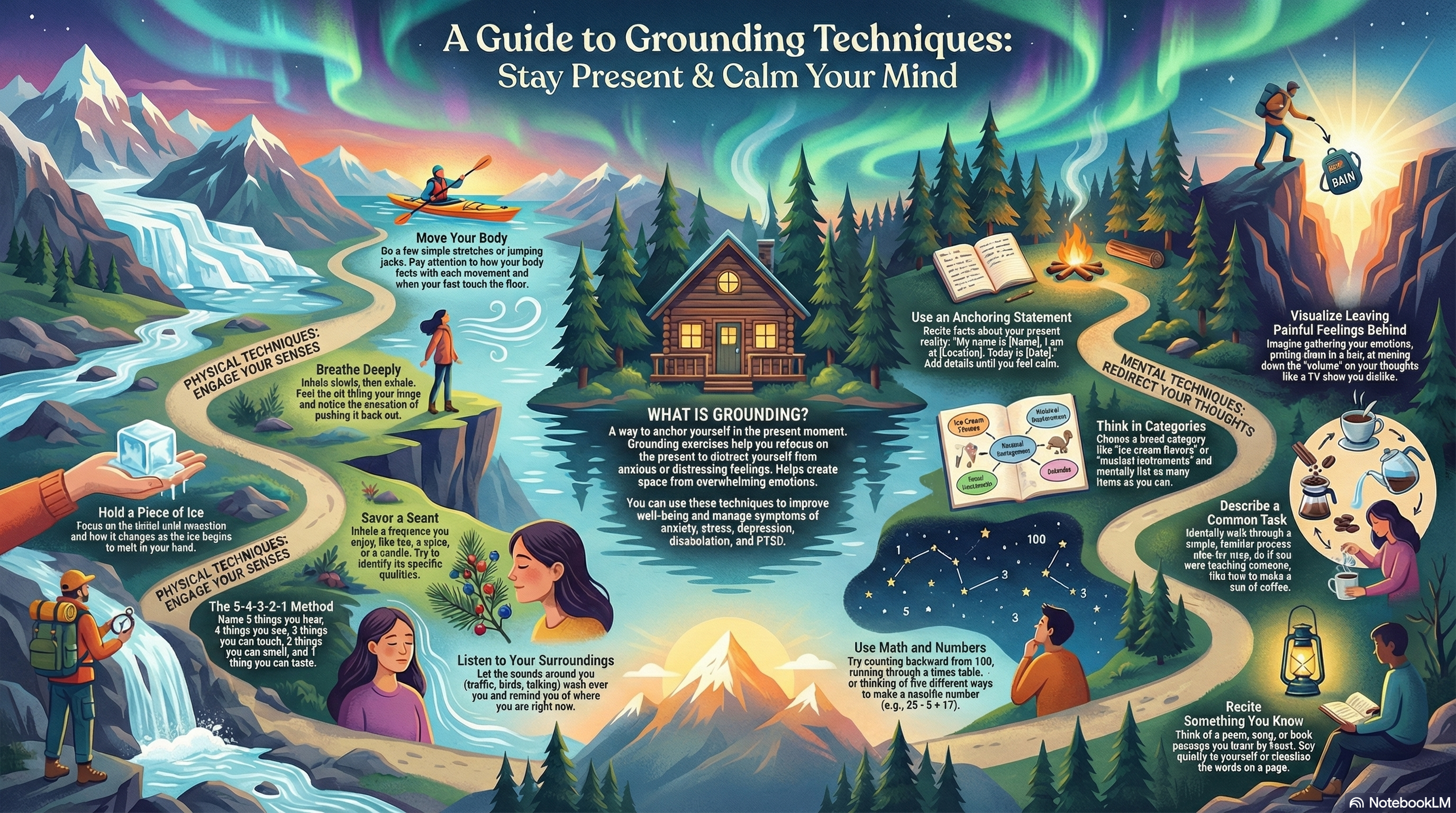
Techniques to stay present when your nervous system is louder than the room. Physical and mental options.

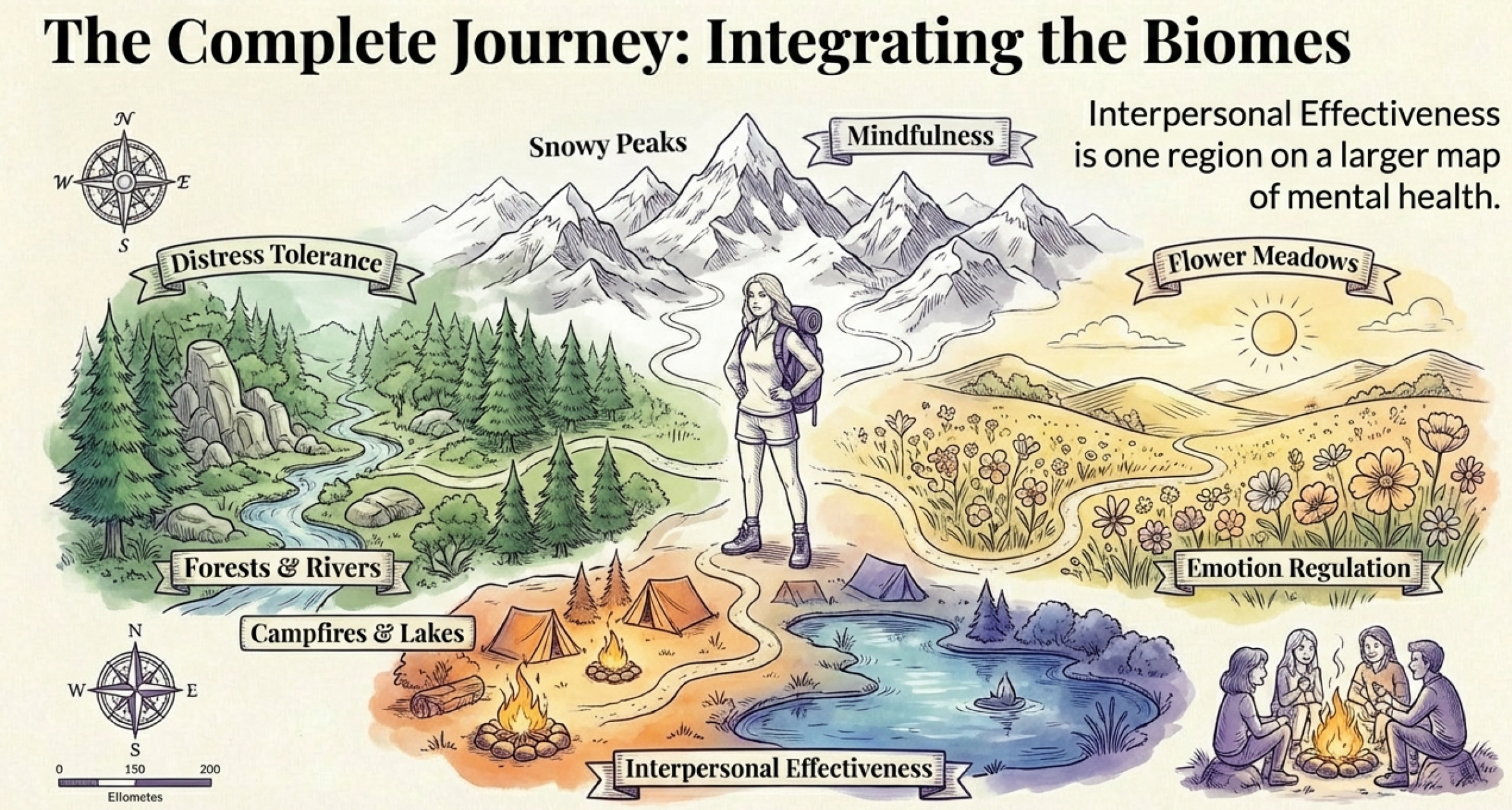
A visual map of the four DBT skill areas and how they fit together — mindfulness, distress tolerance, emotion regulation, interpersonal effectiveness.

A self-check for caregivers and high-output professionals. What's giving back, what's quietly taking.

A primer on the nervous-system concept that quietly explains a lot of "why do I keep doing this?"

Books I recommend often — on attachment, trauma, grief, and recovering from being the strong one.

A few prompts to make the first 50 minutes feel less like staring at a blank page.